Instagram Influencer Rates in 2026: How Much Do Creators Charge Per Post?
Contents
- What is the average Instagram influencer price per post in 2026?
- Instagram influencer rates by follower tier
- What changes the cost of a sponsored post?
- How to set an Instagram influencer budget
- How to tell if an influencer quote is fair
- Why follower quality matters
- What US brands should know about paid posts
Instagram influencer rates in 2026 can range from a few dollars to tens of thousands for a sponsored post. One recent marketplace report found that brands paid an average of $193 per Instagram collaboration. That is a useful starting point, but it is not a fixed price or a national average for every US campaign.
A simple photo post may cost less than a Reel that needs filming and editing. A creator with a focused US audience may also charge more than one with a similar follower count but a less relevant audience. The final fee depends on the work, the audience and the rights a brand wants.
What is the average Instagram influencer price per post in 2026?
Collabstr’s 2026 Influencer Marketing Report found that brands paid an average of $193 for an Instagram collaboration on its marketplace. Creators listed an average asking price of $214. The report reviewed more than 21,000 collaborations and 472,000 creator packages. Its data covers marketplace activity from 2025, so it is a recent reference point, not a promise of what any creator will charge. “Collaboration” can also cover different content and campaign scopes. Collabstr 2026 Influencer Marketing Report
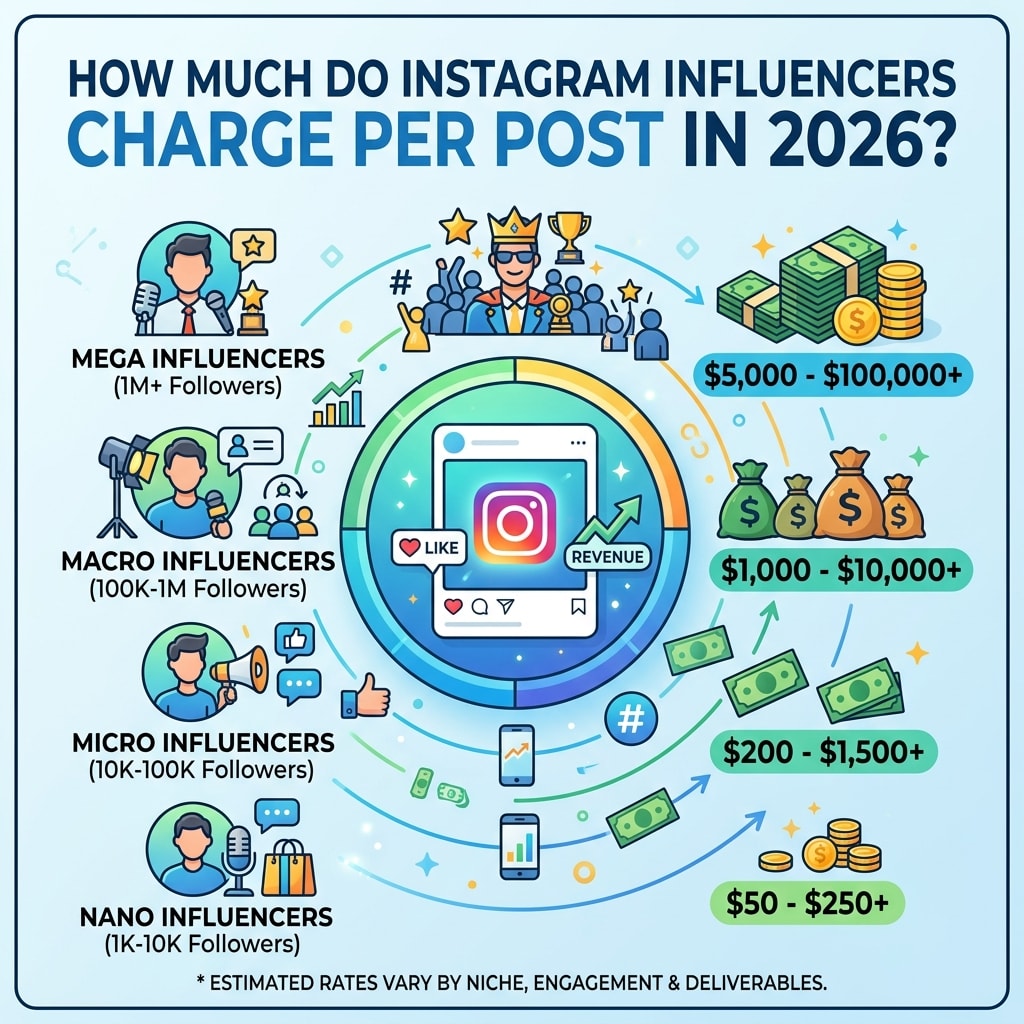
A separate 2026 Instagram influencer rate guide offers broad sponsored post estimates by follower tier. In US dollars, it places nano creators with fewer than 10,000 followers at about $10 to $100 or more. Micro creators with 10,000 to 100,000 followers may charge about $100 to $500 or more. Mid tier creators with 100,000 to 500,000 followers may ask $500 to $5,000 or more. Macro creators with 500,000 to 1 million followers may charge $5,000 to $10,000 or more. Mega creators with more than 1 million followers may charge $10,000 or more. Influencer Marketing Hub’s 2026 Instagram rate guide
These figures are planning benchmarks, not a US rate card. The guide notes that recent reach, audience value, format and usage rights can change the fee. If a campaign needs to reach US consumers, the creator’s share of US-based followers may matter more than the total follower count.
Instagram influencer rates by follower tier
Follower count gives brands a quick way to sort potential creators, but it is only a starting point. A smaller creator may reach a close-knit group that cares about a product. A much larger account may offer more views, but its audience could be less likely to act.
Nano creators can be useful for local campaigns or specific interests. They may have a smaller audience, but their content can feel close to the community they serve. Micro creators often offer a balance between reach and a clear niche. Mid tier and larger creators can help brands reach more people at once, but their fees and campaign terms often rise.
Compare creators with similar audiences and formats. A fee for one photo is not a fair match for a fee that covers a Reel, several Stories and permission to reuse the content in ads.
What changes the cost of a sponsored post?
The type of content matters. A simple feed photo may need less work than a Reel with a script, several takes, editing, captions and product shots. Stories may be sold as a group of frames. A package with a Reel, a feed post and Stories will cost more than one post alone.
Production time is another factor. A creator may need to travel, rent a space, buy props or hire an editor. If a brand asks for several versions or quick changes, that can add to the fee.
The brand’s rights matter too. A creator’s base price may cover one post on their own account. If the brand wants to run that content as an ad, place it on a website or use it for several months, the creator may charge an extra licensing fee. A request that the creator avoid working with competing brands for a period can also raise the price.
How to set an Instagram influencer budget
Set a campaign goal, choose the content you need, review recent creator results and ask for a clear list of fees and rights.
Start with the result you want. A campaign to introduce a new product may need broad awareness. A local service may need calls or visits. A launch may work better with several posts over a few weeks than with one placement.
Then choose a format. Ask for separate prices for a feed post, Reel, Story set and package. Find out whether filming, editing, revisions and posting are included. If you plan to reuse the content, ask how much paid use will cost and how long those rights last.
Review recent results, not just the public follower count. Look at average views, comments, saves and audience location across several posts. Ask for account insights if you need a closer look at reach. One strong post may be an outlier, so compare a group of recent posts.
Finally, write down the agreement. Include the content, timing, payment date, review steps and rights. This makes it easier to compare quotes and reduces surprise costs.
How to tell if an influencer quote is fair
Compare similar creators and similar work, then weigh audience fit, recent results and production effort.
Ask what the fee includes. A quote may seem high until you see that it covers filming, editing, two rounds of changes and paid ad use. A low quote may not include those items at all.
Compare a few offers using the same brief. Review where each creator’s audience lives and whether those people fit your customer base. Then think about what success means for your campaign. A creator who can reach a small, relevant group may be a better choice than one who can reach many people with little connection to your product.
Do not select a creator based on a single number. Price, audience fit and content quality work together.
Why follower quality matters
A large follower count does not prove that an account has an active or relevant audience. Check recent comments and views for patterns that make sense for the creator’s posts. Look for real questions and replies, not repeated lines that could appear under any post.
Searches for services using phrases such as Buy Instagram followers may lead to offers that raise a profile’s displayed count. Purchased followers do not show that real customers are watching or responding. They can also make campaign results harder to judge. Meta has taken action against services that used automation to distribute fake comments and other engagement on Instagram. Meta’s statement on fake engagement automation
For a brand, genuine audience fit is more useful than a larger number on a profile. Ask creators how they track results and review the data that matters to your goal.
What US brands should know about paid posts
When a creator receives money, a free product or another benefit for promoting a brand, the relationship may need to be disclosed. The Federal Trade Commission says the disclosure should be easy to notice and understand, and should appear with the endorsement. Words such as “ad” or “sponsored” can make the relationship clear. FTC guidance for social media influencers
Brands should include disclosure expectations in the campaign brief. The creator should know what to say and where the disclosure should appear. A clear agreement helps the creator, the brand and the audience understand the partnership.
Frequently Asked Questions
How much does an Instagram influencer with 10,000 followers charge?
There is no single rate. A creator around 10,000 followers may fall near the top of the nano tier or the start of the micro tier, depending on the guide. Format, audience location and rights also affect the quote.
Do Instagram Reels cost more than photo posts?
Often, yes. Reels can take more time to plan, film and edit. Ask for separate prices so you can see what the extra production includes.
Should a brand pay based only on follower count?
No. Use follower count as a starting point, then review recent reach, audience fit, content quality and campaign rights. The best choice is the creator who fits your goal and budget.


